
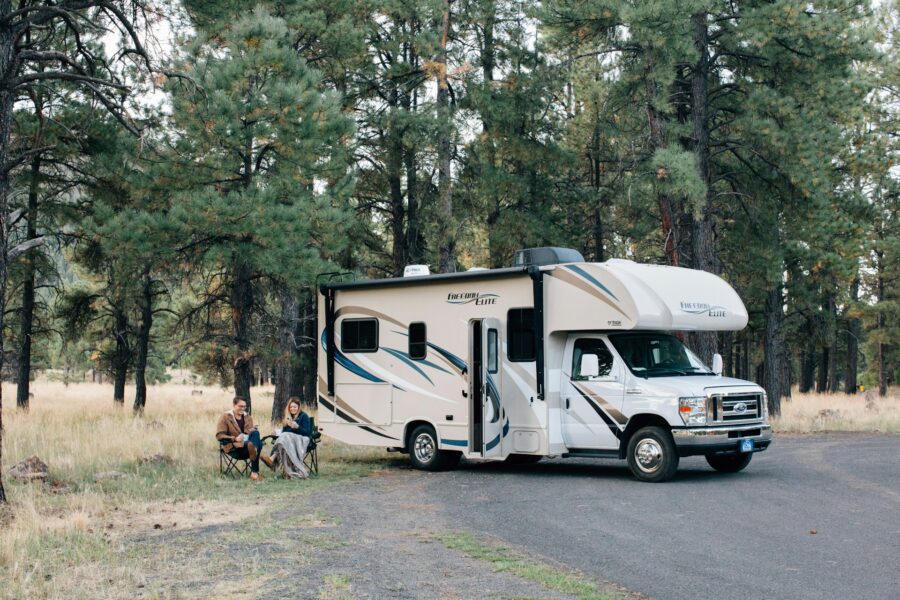
RV Camping in Arkansas: A Trip Planning Guide for the Ozarks
By admin
Fuel tank topped off, travel mug still steaming, and the map on the dash shows a long green stretch of hills between you and tonight’s campsite. Good RV camping Arkansas trips start right there, with a little planning done before you leave the driveway. Lakes sit in the folds of the Ozarks, rivers run cold and clear, and the nicest campgrounds fill up on the same weekends everyone else picked. Timing, route and the right site make most of the difference.
Every Season Offers a Different Arkansas
Arkansas RV camping works year-round, but each season changes the trip.
Spring brings dogwoods, green hillsides and rising rivers. Mornings can be cool and afternoons warm, so pack layers and expect a few rainy days. It is a lovely time for hiking and fishing before the summer crowds arrive.
Summer is lake season. Families come for swimming, paddling and long evenings outside, and lakeside campgrounds fill fastest from Memorial Day through Labor Day. Book early and plan your days around the water, with shade and an air-conditioned rig waiting for the hottest part of the afternoon.
Fall might be the Ozarks at their most beautiful. The hardwoods on the hills turn red and gold, and nights get crisp enough for a sweatshirt at the picnic table. Weekends around peak color are busy, so a midweek arrival can make check-in calmer.
Winter is the quiet season. Campgrounds empty out, and lakes in north central Arkansas host bald eagles. At Crown Lake, eagles are part of the scenery, and a cold, clear morning with a thermos on the shoreline is reason enough to come. If you camp in winter, protect your water hose from freezing and confirm which facilities are open before you go.
Driving the Ozarks with a Big Rig Takes Patience
Much of north Arkansas is rolling hill country. You will meet two-lane highways with curves, climbs and short sight lines, and some scenic back roads are better explored in a tow vehicle than in a 40-foot motorhome. The state’s own RV trip planning guide singles out the Pig Trail (Ark. 23) as one to avoid in large RVs because of its tight roads, switchbacks, lack of shoulders and overhanging trees, and it advises planning routes around the size of your rig.
A few habits make the drive much easier:
- Stick to main highways with the rig. Use your GPS for estimates, but check the route against a paper or truck-friendly map before trusting a shortcut through the hills.
- Use lower gears on descents. Long downhill grades heat up brakes quickly. Let the engine do the work and keep your speed steady.
- Drive in daylight. Deer are common at dawn and dusk, and arriving at an unfamiliar campground after dark is stressful for everyone.
- Plan fuel stops. Small towns are spread out, so top off when you have the chance instead of waiting for the gauge to warn you.
- Give yourself extra time. A trip that looks short on the map takes longer on winding roads.
Once you are parked, unhook the tow car or use your truck for day trips. The scenic drives are much more fun when you are not hauling your house behind you.
Know Which Hookups You Need Before You Book
Campgrounds across Arkansas range from primitive sites with no utilities to fully serviced pads. Before you reserve, decide what your trip needs.
Full hookups give you electric, water and sewer at your site. They are the easiest choice for longer stays, families who shower and do dishes often, and anyone who would rather not move the rig to a dump station mid-trip.
Water and electric only sites work for shorter stays if your holding tanks have the capacity, but you will need to dump on the way out.
Electric amperage matters too. Larger rigs with two air conditioners usually want 50-amp service, while many smaller trailers run fine on 30 amps. Check your rig’s plug and match it to the site description, and bring an adapter just in case.
Surfaces matter more than people think. A concrete pad stays level and clean after a summer storm, while grass and gravel sites can turn soft and muddy. If leveling has ever turned your arrival into an hour-long project, a paved or concrete site is worth seeking out.
A Resort-Style Park Changes the Whole Trip
There are two kinds of RV trips. One is about the road, with a new campground every night. The other is about the destination, where you settle in for several days and let the place entertain you. For the second kind, the park itself matters most. When comparing options, look for:
- Water you can actually enjoy. A beach, a swimming dock and boat docks turn “near the lake” into “on the lake.”
- Things to do when the weather turns. An indoor pool, game room or fitness center saves a rainy afternoon, especially with kids.
- Good site design. Pull-through sites, concrete pads and full hookups make arrival simple.
- On-site food and supplies. A convenience store and a restaurant mean fewer trips into town for forgotten ketchup or a night off from cooking.
- Room for the whole crew. Playgrounds, walking trails and a dog park keep everyone happy, two legs or four.
Why Horseshoe Bend Makes a Great Base Camp
Horseshoe Bend is a small town in the Ozark foothills of north central Arkansas, and Crown Lake Resort sits right in the center of it, on the shore of Crown Lake. It is an easy place to stay put for a few days.
The RV Resort at Crown Lake Resort, which operates as the Crown Lake KOA Holiday, is built for exactly that kind of stay. Of its 73 concrete pads, 59 are pull-thru, so most arrivals never need a spotter. Each pad comes with full hookups (power, water and sewer), plus a picnic table and a BBQ grill for supper outside. WiFi is available, and most sites also offer direct connect Ethernet and full HD cable for anyone who needs to work a little or catch a game.
Nearly everything on that checklist is here. Down at the water, swimmers get the sand and a swimming dock while boaters tie up at the docks. Canoes, kayaks and paddle boards are for rent, and pontoons can be rented too (call 870.750.0700). Away from the water are the indoor pool, the dog park, private shower rooms, the convenience store and an on-site restaurant and bar.
We’d be happy to have you as a neighbor on Crown Lake. RV sites book through KOA, so you can check dates on the Crown Lake KOA Holiday page, and our RV sites page has more on the sites themselves. Questions about the property? Call us at 800-872-3301.
Fill Your Days on and Around Crown Lake
Once the rig is level and the awning is out, you may not want to leave for a day or two. Mornings are good for paddling while the water is calm, and the property map and amenities overview gives you a feel for where the beach, docks and trails are.
Bring a rod. The Arkansas Game and Fish Commission reminds visitors that a fishing license is required from age 16, and buying it online the night before means you can cast on day one.
Families with older kids can add a session at the Crown Lake Aqua Park, a floating obstacle course on the lake. Guests need to be at least 6, and everyone wears a life jacket.
For a day away from the lake, unhook the tow car and head out:
- Buffalo National River. Established in 1972, it runs free of dams for 135 miles past huge bluffs on its way to the White River, as the National Park Service describes it. It is a stunning place to paddle, hike and fish, and there is no entry fee.
- Ozark Folk Center State Park. This Mountain View park keeps Ozark music, crafts and culture alive, with working artisans in the Craft Village and live mountain music. The park is open mid-April to mid-November, so plan accordingly.
- Spring River country. The Spring River and the small river towns along it make a relaxed afternoon outing in the tow car.
Smart Habits for a Smooth Arkansas RV Trip
A few last tips will save you headaches:
- Reserve early for summer weekends and fall color. Lakeside sites go first.
- Check in during front desk hours. At Crown Lake Resort, the front desk is open 7:30am to 9:00pm from May to November and 7:30am to 8:00pm from December to April, so plan your drive around those times.
- Bring bug spray and check for ticks. Wooded trails and tall grass are part of Ozark life.
- Pack for changing weather. Spring storms and cool fall nights can surprise you.
- Leave room in the schedule. An eagle on a dead snag over the water or a long talk at the picnic table after dark will not show up on any itinerary.
Bring the Rig and Stay Awhile
RV camping in Arkansas is at its best when you slow down and let one place become the trip. At Crown Lake, that place has a beach a short walk from the pad.
Come spend a few slow days with us in Horseshoe Bend. The RV Resort at Crown Lake page has the full amenity list, and reservations go through KOA. Friends who would rather sleep in a cabin can call us at 800-872-3301, and we’ll find them lodging on the same lake.
Frequently Asked Questions
Which months are most pleasant for RV camping in Arkansas?
Late spring and fall are favorites because temperatures are comfortable and the scenery is at its best, with dogwoods in spring and colorful hardwoods in fall. Summer suits swimming and paddling, and winter offers quiet campgrounds and bald eagle sightings on lakes like Crown Lake.
Can I tour Crown Lake Resort before booking?
Yes. If you are passing through Horseshoe Bend, you can ask for a property tour and see the RV sites, beach and amenities in person. Email info@crownlakeresort.com or use the contact page to arrange a time.
Is there somewhere to eat at the RV Resort?
The RV Resort has an on-site restaurant and bar, and Papa Dick’s Restaurant and pizzeria is part of the resort, so you can take a night off from cooking without driving into town. A convenience store covers snacks and forgotten essentials.
Where is Crown Lake Resort located?
The resort’s address is 1530 Ivory Lane, Horseshoe Bend, AR 72512. It sits on the shores of Crown Lake in north central Arkansas, in the foothills of the Ozarks.
Can friends who do not own an RV stay with us?
Yes. Crown Lake Resort also offers cabins and condos, including lakefront, beachfront and lakeview options, so a mixed group can share the same lake. Lodging is booked directly with the resort by calling 800-872-3301.
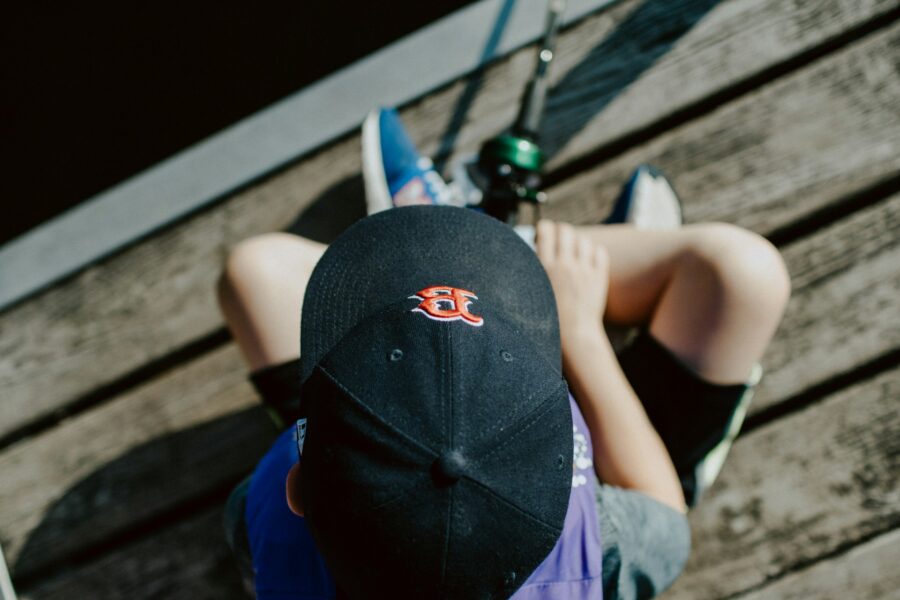
Fishing with Kids at the Lake: How to Make the First Trip a Good One
Five minutes in, your six-year-old has asked whether it is biting yet four times, the worm has come off the hook twice, and the bobber is tangled in a bush. Then it dips, they grab the rod with both hands, and a little sunfish comes flapping out of the water to shrieks of delight. Fishing with kids is mostly tangles and snack breaks with a few of those moments mixed in, and it goes best when you plan for small wins rather than a trophy.
These kids fishing tips are for parents and grandparents planning a child’s first few times on a lake, where success means a child who asks when they can go again.
Keep the first trip short and the expectations low
The most common mistake is planning a grown-up fishing trip and bringing a child along. Young kids do best with short sessions, often 30 minutes to an hour, with breaks for snacks, rock throwing and frog spotting. When attention runs out, stop while everyone is still happy. You can always come back after lunch.
Choose a time when fish are likely to be active and the weather is comfortable. Early morning and early evening are often good, and they spare everyone the strongest midday sun in summer.
Gear made for small hands
You do not need much, and none of it needs to be fancy:
- A short, light rod with a push-button reel. A rod around four to five feet long is easy for a child to handle, and push-button reels are the simplest to learn.
- Small hooks. Small hooks suit the mouths of bluegill and other sunfish, which are the fish kids catch most often.
- A bobber. Watching a bobber dance is half the fun, and it shows exactly when to reel.
- A few split shot weights to help the bait sink below the bobber.
- Bait. Worms are the classic choice and almost every small fish will take one.
Bring a pair of pliers for unhooking, a small towel, sunscreen, hats, water and plenty of snacks. Pinching down the barb on each hook with pliers makes unhooking fish, and fingers, far easier.
Go where the bites come easily
Kids want action. Bluegill and other sunfish are the classic first fish: they live close to shore, gather around docks and weeds, and bite readily on a small piece of worm. Look for shaded spots along the bank, around docks and near weed edges, and fish the bait just a couple of feet under the bobber.
The Arkansas Game and Fish Commission also runs the Family and Community Fishing Program, which stocks ponds around the state. According to the AGFC, channel catfish are stocked in spring and early fall, and catchable rainbow trout are stocked from November through February. The program also hosts events and beginner instruction sessions, and some of its waters are set aside for anglers 15 and younger, older anglers and anglers with a disability fishing license, with adults welcome to fish alongside a young angler who is actively fishing.
A beachfront condo keeps everything a kid needs within a few steps. Our 2 BR pool beachfront condo sleeps six and sits near the beach, the pool and the children’s playground, so a short fishing session fits easily between everything else. Phone the front desk at 800-872-3301 to book it, or to ask what else might suit your family.
Bait, bobbers and the art of waiting
Show your child how to cast with a gentle underhand swing or a short sidearm flick, and do not worry if the first dozen land at your feet. Once the bobber is out, explain what to look for: a small wiggle means a fish is curious, and when it goes under, it is time to reel.
Let your child do as much as possible. Help them hold the rod, but let them turn the reel handle and bring the fish in, even if it takes a while. The pride on their face is worth every tangle. If bites are slow, move to a new spot rather than asking them to wait longer, and keep the conversation going about what might be under the water.
Safety comes first, every time
A few habits keep a happy day from turning into a scary one.
Life jackets. The CDC’s water safety guidance says children and adults are best protected by well-fitted, fully fastened U.S. Coast Guard approved life jackets, and that floaties, arm bands and water wings do not prevent drowning. Put a properly sized life jacket on young children whenever they are fishing from a dock, a bank with deep water or a boat.
Supervision. The CDC advises that an adult should always be within arm’s length of a child who is in or near water, and that children who have had swimming lessons still need close and constant supervision. It also notes that about 40 percent of drowning deaths among children ages 5 to 14 happen in natural water. Choose one adult whose only job is to watch the kids, and swap the role when needed.
Hooks. Teach children to look behind them before casting and to keep their hands off the hook until an adult has the fish under control. Sunglasses or other eye protection are a smart idea when several young anglers are casting at once.
Sun and heat. Hats, sunscreen, shade and water breaks matter more than any fishing tip.
Make it about more than the fish
On days when nothing bites, the trip can still be a success. Bring a small net to look for minnows, tadpoles and crayfish along the shallows. Count turtles, listen for frogs, and watch for birds over the water. In winter, north central Arkansas lakes can bring sightings of bald eagles, which makes for a thrilling moment even without a fish.
Snacks and a beach break do wonders, too. A trip that ends with a swim and an ice cream will be remembered fondly no matter what the bobber did.
Catch and release as a first lesson
Kids learn a great deal from releasing fish. Show them how to wet their hands before touching a fish, keep it in or close to the water, and let it swim away on its own. Explain that letting small fish go means there will be more fish to catch next time. If your family wants to keep a few, check the limits first: the AGFC’s statewide limits allow 50 bream (bluegill and other sunfish combined) a day, with no daily limit on bream shorter than 4 inches.
Arkansas youth rules and family events
In Arkansas, kids get an easy start. The AGFC’s licensing FAQ says anyone 16 or older must carry a valid fishing license, so children under 16 can fish without one. Any adult who fishes alongside them needs a license, and visitors can buy a short nonresident trip license online.
Each June, the AGFC holds a Free Fishing Weekend, when anyone can fish without a license or trout permit. In 2026 the AGFC also held free family fishing derbies for youth 18 and under and their families at four state fish hatcheries that Saturday. Watch agfc.com in spring for the next ones.
A family base on Crown Lake
Crown Lake Resort, right in Horseshoe Bend, suits exactly this kind of trip. Kids can fish the lake without anyone getting in the car, and when attention wanders, the backup plans are close by: sand to dig in, a playground, Safari Mini Golf, a game room, and pools for cooling off. See it all on our explore the property page. Older kids may love the Aqua Park, which welcomes guests from age 6 with a parent or guardian on site for ages 6 to 13 and a Coast Guard certified life jacket required at all times.
Our RV Resort is there for families bringing the camper (and the family dog), with its own playground, beach and swimming dock.
We’d love to host your young anglers at Crown Lake Resort. Look over the beachfront stays and the full list of cabins and condos, or phone us at 800-872-3301 and we’ll suggest a family-sized place by the water.
Frequently Asked Questions
What age is right for a child’s first fishing trip?
Many children enjoy fishing from around age 3 or 4 with lots of adult help, using a short rod and a bobber. The right age is when a child can stay interested for 15 to 20 minutes and follow simple safety rules near water.
What is the best bait for kids to use?
Live worms are the easiest and most reliable choice, since most small fish will bite them. A small piece of worm on a small hook under a bobber is all a beginner needs, and many kids enjoy the job of baiting the hook once they get used to it.
Should my child wear a life jacket while fishing from shore?
Yes, for young children and weak swimmers, especially near docks, steep banks or deep water. A properly fitted Coast Guard approved life jacket is far more protective than inflatable arm bands, and it lets kids relax and enjoy themselves.
How do I stop my child from getting bored?
Fish where bites come quickly, keep sessions short, and bring snacks and a backup activity such as looking for crayfish or skipping stones. Letting the child reel in every fish, and celebrating each one, keeps excitement high.
Do I need a license to help my child fish in Arkansas?
If you are 16 or older and actually fishing, yes. If you are only helping a child under 16 who is doing the fishing, ask the AGFC about your situation or buy a short trip license so you can pick up a rod yourself without worry.
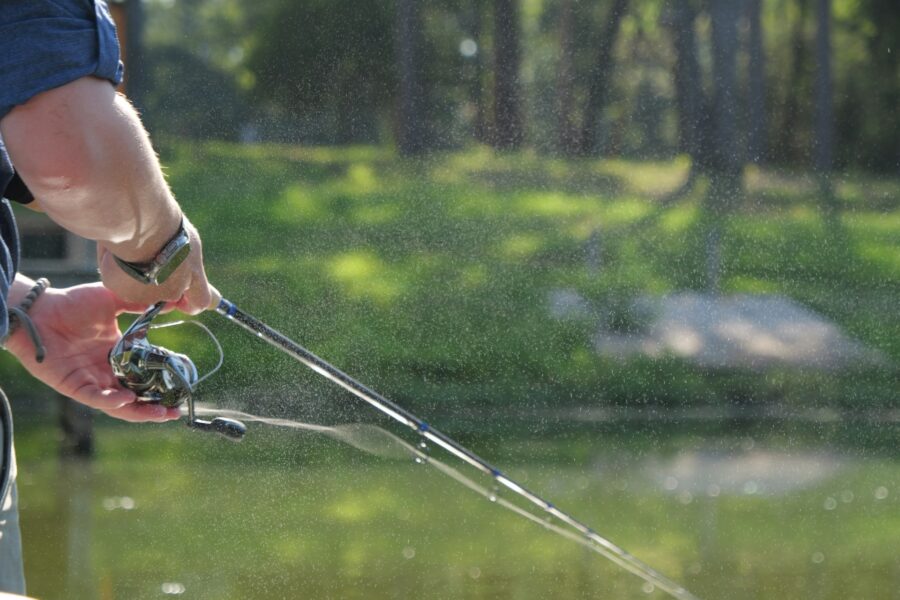
Bass Fishing in Arkansas: A Visiting Angler’s Primer
You have one free day and two very different ideas about how to spend it. One is a big Ozark reservoir at sunrise, casting to rocky points and flooded timber for largemouth. The other is a clear, cold stream where you wade in sneakers and watch a smallmouth flash out from behind a boulder. Bass fishing in Arkansas offers both, often within the same county, and knowing which bass lives where is the first step to choosing well.
Three native bass, three personalities
The Arkansas Game and Fish Commission calls black bass the state’s most sought-after game fish. According to its black bass page, three species are native to Arkansas: the largemouth, the smallmouth and the spotted bass.
Largemouth bass are the generalists. The AGFC describes them as widespread throughout the state in clear, calm waters, including natural and manmade lakes, rivers and streams, bayous, backwaters and small ponds. They are the bass most visitors catch, and they relate strongly to cover such as weeds, docks, brush and fallen trees. The AGFC also stocks the Florida strain of largemouth because it tends to grow larger than the northern strain.
Smallmouth bass are the stream fighters. The AGFC calls them mainly inhabitants of cool, clear mountain streams, though they also live in moderate numbers in some reservoirs. Pound for pound, few freshwater fish pull harder, and a smallmouth hooked in current will remind you of that for the rest of the day.
Spotted bass sit somewhere in between. They primarily inhabit large streams and rivers, but the AGFC notes they have adapted well to impoundments across the state. A spotted bass looks much like a largemouth, but its jaw usually does not extend past the eye, and it has rows of small dark spots low on its sides.
Lakes or streams: choosing your water
Your choice of water largely decides which bass you will meet.
Big reservoirs
The large Ozark lakes are deep and clear, with rocky banks, bluffs, points and coves. Largemouth and spotted bass are the main targets, with smallmouth in some lakes too. Boats make it easier to cover water, but bank anglers can do well around points, docks and the backs of coves, particularly in spring and fall.
Ozark streams and rivers
Clear, rocky streams are smallmouth country. Many can be waded in summer, and a canoe or kayak lets you float from one gravel bar to the next and fish the deep pools and boulder runs in between. The Buffalo National River is a famous example. The National Park Service notes the river is home to seventy-four species of fish, and that smallmouth bass anglers will find them there. Its suggestion for a summer morning or late afternoon is to tie on a popper or other topwater fly and hang on for the explosion.
Smallmouth are not limited to the famous names. The AGFC’s own list of Blue Ribbon Smallmouth Streams (more on that below) includes the Spring River and the Eleven Point, so even a trip planned around trout country can put you near good bass water.
Our lakeview cabins make a comfortable base between bass trips. At Crown Lake Resort there is room to spread out wet shoes and tackle, and the lake is right there to look at when you get back. The front desk (800-872-3301) can point you to a lakeview cabin that suits your crew.
How the seasons move bass
Bass behavior follows water temperature. These broad patterns hold on most Arkansas waters:
- Spring is the favorite season for many anglers. As water warms, bass move shallow to feed and then to spawn, and they become easier to find along banks, flats and the backs of coves.
- Summer pushes many lake bass deeper during the heat of the day, so early mornings, evenings and cloudy days are your best windows near the surface. Stream smallmouth stay active all summer in shaded pools and moving water.
- Fall brings bass shallow again as they follow baitfish into creeks and coves. It is a great time to cover water with moving lures.
- Winter slows bass down. Fish deeper and slower, and focus on the warmest part of a sunny afternoon.
A small box of lures that works almost anywhere
You can fish Arkansas bass water with a short list:
- Soft plastic worm. Rigged weedless and fished slowly around cover, it catches largemouth in every season.
- Small crawfish-colored crankbait or tube. Crawfish are a favorite food in rocky Ozark water, especially for smallmouth and spotted bass.
- Spinnerbait. Good for covering water along banks and around wood, particularly when the water is a little stained or the wind is up.
- Topwater lure. A popper or walking bait at dawn and dusk brings the most exciting strikes of all.
- Ned rig or small jig. A small soft plastic on a light jig head is a reliable choice when fish are finicky.
For streams, a medium-light spinning rod with 6 to 8 pound line makes small smallmouth great fun. On lakes, a medium-power rod with slightly heavier line gives you more control around cover. Fly anglers on the Buffalo can follow the Park Service’s suggestion of a bead head woolly worm or crawfish fly worked near large rocks along the banks.
The rules to know before you go
Every angler aged 16 and up must carry a valid Arkansas license. Beyond that, a few limits matter most for bass:
- Black bass, combined. The AGFC’s statewide limits set a daily limit of 10 black bass, largemouth, spotted and smallmouth combined.
- Smallmouth in streams. The 2026-27 regulations named ten Blue Ribbon Smallmouth Streams, where the limit is one fish over 15 inches per day. On all other flowing waters, the limit is two fish over 12 inches. Read the guidebook for the full list of streams and rules.
- Lake-specific rules. Some lakes have their own bass rules. Lake Monticello, for instance, allows five largemouth a day, with only one 16 inches or longer.
- The Buffalo River. The Park Service notes that only hook and line fishing with a closely attended rod is allowed, that AGFC rules apply, and that bait minnows must either come from the Buffalo and its tributaries or be bought from a licensed dealer.
Many bass anglers release most of what they catch, especially big fish and stream smallmouth, which helps keep these fisheries strong. Wet your hands before handling a bass, support its belly for a photo, and get it back in the water quickly.
Your base for an Arkansas bass trip
After a long day on the big reservoirs or a wet one in an Ozark stream, it helps to come back somewhere easy. Crown Lake Resort is right in Horseshoe Bend with its own stretch of lakefront, so a short evening session needs no drive at all, and the kayaks and paddleboards let you poke along the shoreline after supper. Take a look at everything on our explore the property page.
For a group of anglers, the Deluxe Two-Bedroom King Lakefront Condo sleeps eight and has a deck with lake views. If you would rather bring your own rig, our RV Resort (a KOA Holiday) adds boat docks and pontoon rentals to its full-hookup sites.
Crown Lake makes an easy home base for an Arkansas bass trip. Look through every cabin and condo at your own pace, or give the front desk a ring at 800-872-3301 and tell us how many anglers are coming.
Frequently Asked Questions
What is the best month for bass fishing in Arkansas?
Many anglers favor spring, when bass move shallow and are easy to find, with fall a close second. That said, Arkansas bass can be caught in every month, and the best month for you is the one when you can fish early mornings and evenings.
How can I tell a spotted bass from a largemouth?
Close the fish’s mouth and look at the jaw. On a largemouth the upper jaw extends past the back of the eye, while on a spotted bass it usually does not. Spotted bass also have a small, rough tooth patch on the tongue that you can feel with a fingertip.
Can I fish for smallmouth without a boat?
Yes. Wading is one of the best ways to fish Ozark smallmouth streams in summer. Wear shoes with good grip, carry a small tackle pack, and stay out of the water during or right after heavy rain, when streams can rise quickly.
Is catch and release required for bass in Arkansas?
Not as a general rule. Anglers may keep bass within the daily and length limits for the water they fish. A few places do require release, though: at ponds in the AGFC’s Family and Community Fishing Program, largemouth bass must be released immediately.
Do I need a special permit for bass fishing?
No special bass permit is needed. A standard Arkansas fishing license covers bass for anglers 16 and older. A trout permit is only needed for trout or for fishing certain designated trout waters.
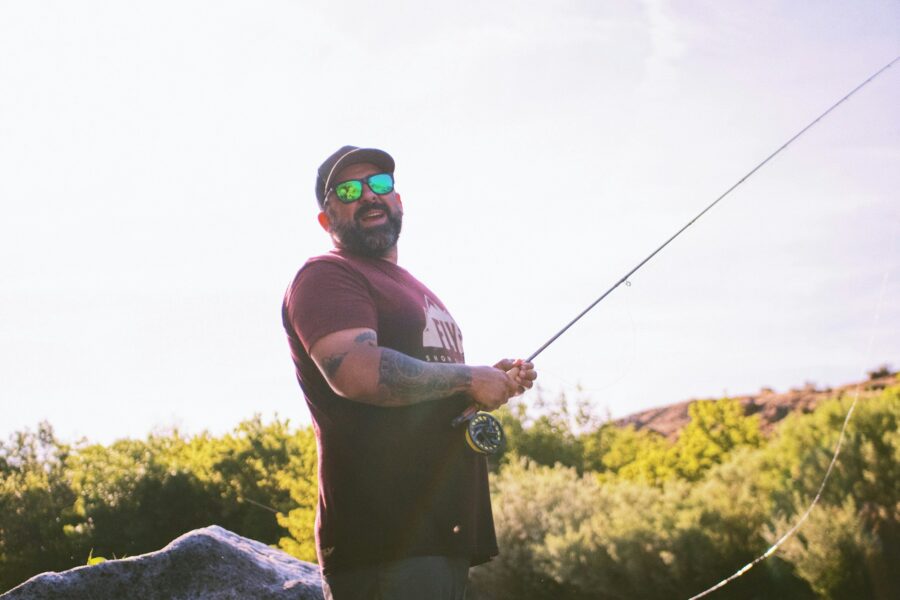
Crappie Fishing in Arkansas: Seasons and Simple Techniques
The bobber gives a tiny shiver, lies still, then slides slowly sideways across the surface. You lift the rod with a flick of the wrist and feel that soft, headshaking weight that every crappie angler knows. Crappie fishing in Arkansas is built on moments like that, and it rewards patience and light tackle far more than an expensive boat.
Crappie bite all year, but where they live changes with the seasons. Learn the calendar and a couple of basic rigs, and you can catch them on almost any lake in the state.
Meet the two Arkansas crappie
Arkansas has both black crappie and white crappie, and you will often catch both in the same lake. Black crappie are deeper bodied, with dark speckles scattered across silvery sides. White crappie are a little more streamlined, with faint dark vertical bars. The easiest way to tell them apart is to count the hard spines on the top fin: black crappie usually have seven or eight, white crappie five or six.
For the rules, it does not matter which you have. The Arkansas Game and Fish Commission counts them together, and its statewide limits set a daily limit of 30 crappie, black and white combined. Some lakes have their own rules. Under the 2026-27 regulations, for example, Lake Monticello and Lake Cargile allow 15 crappie a day with only seven 12 inches or longer, so check the guidebook for any lake you plan to fish. The same update did away with possession limits statewide, though daily limits remain.
Anglers in the South have long called crappie “papermouths,” and the name is a good reminder. Their mouths are thin, so a hard hookset tears the hook right out.
Spring: the shallow-water season
Spring is crappie season in most people’s minds, and the AGFC agrees. Its crappie spawn tips say spring and crappie go together like ham and eggs. As the water warms, crappie move toward shallow cover to spawn, and that makes them easier to reach from the bank, a dock or a small boat.
How shallow depends on water clarity. The AGFC notes that crappie may spawn in 8 feet of water on clear lakes, while in muddy water they can spawn so shallow that their top fins nearly break the surface. In general, crappie hold shallower when the water is stained or dingy than when it is clear. Look along the edges of grass and weeds that are just starting to show green tips, and around brush, docks and fallen trees.
A few spring habits from the AGFC make a real difference:
- Use light line. Line in the 4 to 8 pound range lets a minnow or jig move naturally and does not spook fish.
- Use the longest rod or pole you can. Shallow crappie spook easily, so reaching them from a distance helps.
- Fish at one depth. Crappie tend to hold at the same depth along a piece of structure, so once you get a bite, keep your bait at that depth.
- Set the hook gently. A quick lift of the wrist is all a crappie needs.
Spring is a lovely time to stay with us on Crown Lake. Our lakefront units at Crown Lake Resort keep the water in view while the coffee brews, and the shoreline is a short stroll away once the bobbers come out. Phone 800-872-3301 and we’ll find you a good spot for your spring trip.
Summer: deeper water and brush piles
When the surface heats up, crappie leave the shallows. In many deep, clear lakes a layer forms where warm surface water meets cooler water below. The AGFC calls this thermocline the Goldilocks zone for fish, and in summer crappie tend to stack up right around it.
The AGFC’s summer crappie article describes the approach used by experienced anglers. On DeGray Lake, the thermocline typically sets up 20 to 25 feet deep in early summer. Brush piles sitting deeper than that are written off, and the best piles are the ones right at that depth or just above it. A good one can hold a remarkable number of fish.
The technique is simple once you are on the right spot:
- Set your minnow a foot or two above the top of the brush. Crappie feed up, so a bait just above them gets attention.
- Expect them to sink as you arrive. The AGFC notes crappie tend to slide down and away as a boat’s shadow draws near, so ease into position slowly and give them a minute to settle.
- Move on if nothing happens. If the fish ignore your minnow for 15 minutes or so, try the next brush pile.
You do not need to find brush on your own. The AGFC has sunk fish attractors in many lakes and publishes free waypoints for them: search “Fish Attractors” on agfc.com for files you can load into a GPS fishfinder, or open the AGFC interactive map and tap the fish symbols on the lake you plan to fish. Read the weekly AGFC fishing report before any trip, too.
Fall: following the fish as the water cools
As days shorten and the water cools, crappie often perk up and start to roam. Fish that were tight to deep brush in summer may suspend along creek channels or slide back toward mid-depth cover, and they can be in a different spot from one week to the next.
Fall is a good time to cover water. Try a small jig on a light line, counting it down to different depths until you find where fish are holding, then stay at that depth. When you catch one, there are usually more close by.
Winter: slow and deep
Crappie keep biting through winter, but they slow down. They often gather in deeper water near channel edges and brush, and they will not chase much. This is the season for slow, vertical presentations: drop a jig or a minnow straight down over cover and barely move it.
The AGFC’s advice for jigs applies especially now. Crappie react best to a jig that is dropped and held still with a slight twitch every few seconds. Too much action looks unnatural. Bundle up, bring a thermos, and enjoy having the lake largely to yourself. In north central Arkansas, winter also brings bald eagles to the lakes, and watching one glide low over the water makes up for a lot of quiet bobbers.
Two simple rigs that catch crappie all year
You can catch crappie in every season with just two setups:
The minnow and float. Tie a thin-wire hook to light line, add a split shot or two, and clip on a small float set at the depth you want to fish. Hook the minnow through the lips or just behind the top fin so it stays lively. Add enough weight that the float rides low, so the slightest nibble moves it. The AGFC also asks anglers never to dump leftover bait minnows into a lake, but to dispose of them on land to prevent the spread of disease and nuisance species.
The small jig. A lightweight jig head with a soft plastic body is the most versatile crappie lure there is. Cast it and count it down, swim it slowly past cover, or suspend it under a float in very clear water.
A relaxed base for lake fishing
Fishing is one of the everyday pleasures at Crown Lake Resort, right in town in Horseshoe Bend. Try these rigs from the shore in the morning, then trade the rod for a towel and stretch out on the white sandy beach until dinner. Our explore the property page shows the rest of the grounds. Anglers who travel with a camper can stay at our RV Resort (it runs as the Crown Lake KOA Holiday), which also rents pontoons: a comfortable way to reach brush and channel edges well away from the bank.
Bring the crappie rods and we’ll take care of the rest. Have a look at our beachfront stays and the full range of cabins and condos, or ring the front desk at 800-872-3301 and we’ll match a unit to your group.
Frequently Asked Questions
Which bait catches the most crappie in Arkansas?
Live minnows and small jigs are the two most reliable crappie baits. Minnows tend to win when fish are sluggish, while jigs let you cover more water and are easy to carry. Many anglers bring both and let the fish decide.
What time of day is best for crappie?
Early morning and evening are often productive, especially in summer when the surface is warm. On cloudy days crappie may bite well all day. In winter, the warmest part of the afternoon is often the most comfortable and active time to fish.
Can I catch crappie from the bank?
Yes, especially in spring, when crappie move shallow to spawn. Bank and dock anglers do well with a minnow under a float along weed edges, brush and fallen trees. In summer, bank fishing is harder because many fish move deep.
What color jig works best for crappie?
There is no single best color. A useful starting point is natural or light colors in clear water and brighter or darker colors in stained water, then adjust based on what the fish tell you. Carrying a few colors and switching when the bite slows is the practical answer.
Do I need a fishing license to catch crappie in Arkansas?
Yes, if you are 16 or older. Out-of-state visitors can choose a one-day, three-day trip or annual nonresident license from the AGFC, while kids under 16 fish without one.
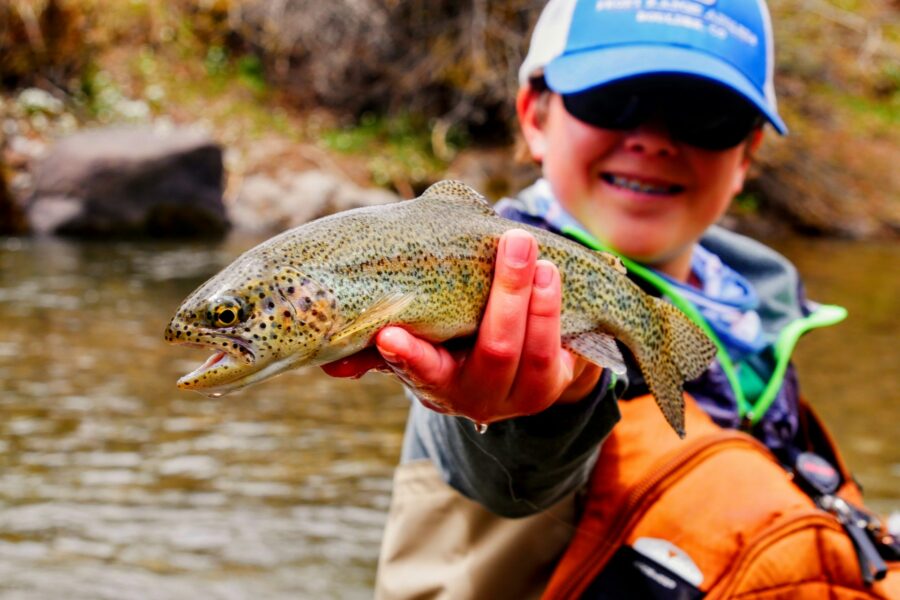
Arkansas Fishing License: What Visitors Need Before They Cast
The car is packed, the rods are strapped in, and somewhere around the state line someone asks the question that stops the conversation: did anyone buy an Arkansas fishing license? Sorting it out takes a few minutes on a phone. The harder part is picking the license that fits your trip, and knowing if you also need the trout permit that surprises so many visitors.
Everything below comes from the Arkansas Game and Fish Commission (AGFC), which issues all Arkansas fishing licenses. Fees change from time to time, so see the AGFC’s licensing pages for current fees rather than relying on any figure you have seen elsewhere.
Who needs a license
The age line is 16. On its license descriptions page, the AGFC says every angler 16 and up has to carry a valid fishing license to take or try to take fish in Arkansas. The only way around it is a licensed “put-and-take” pay lake.
That means children under 16 can fish without a license of their own, which makes family trips easier to plan. Every adult who is actually fishing needs one, even if you only plan to help a child cast now and then and pick up a rod yourself for a few minutes.
Resident or nonresident: how Arkansas decides
Many visitors assume that owning a lake house or a piece of land in Arkansas makes them a resident for fishing purposes. It does not. The AGFC’s licensing FAQ explains that a resident is someone who has physically lived in a bona fide Arkansas residence for at least 60 days and declared it as their full-time residence. Ownership of Arkansas real estate by a person living outside the state does not qualify them as a resident.
Active-duty military members stationed in Arkansas are the exception. They receive resident privileges for hunting and fishing.
Arkansas nonresident fishing license options
Out-of-state anglers choose between three nonresident licenses, and the right one depends on how many days you will actually fish:
- Nonresident 1-Day Fishing License. Valid for one specified day. Handy when fishing is a single afternoon in a longer vacation.
- Nonresident 3-Day Trip Fishing License. Valid for 72 hours from the start time you choose, which suits a long weekend.
- Nonresident Annual Fishing License. Valid for a full year. Families who come back every summer, or anglers staying a week or more, should compare it with buying several trip licenses.
All three are sold online, through license agents and at AGFC regional offices, and the AGFC site lists the current fee for each.
We’d love to have you stay right on the water. Our lakefront cabins and condos keep Crown Lake a short walk from your door, so an early cast before breakfast takes no planning at all. Give us a call at 800-872-3301, tell us who is coming, and we’ll help you pick the right one.
The trout permit, explained
This is the part visitors most often miss. In Arkansas, a fishing license on its own does not cover trout in many places. You need the separate permit the moment you put a trout on a stringer, anywhere in the state. You also need it to wet a line at all on certain designated waters, and the AGFC’s list of those includes the cold tailwaters below the Bull Shoals, Norfork, Beaver, Greers Ferry and Greeson dams, plus Spavinaw Creek east of Highway 59.
Two things matter for visitors:
- Catch and release does not get you out of it on those waters. If you are fishing one of the listed tailwaters, such as the White River below Bull Shoals Dam, you need the permit even if every fish goes back.
- Nonresidents buy a nonresident trout permit in addition to their annual or trip license. It is available online, from license agents, or at regional offices.
When a morning on the White River, the Spring River or another trout stream is part of the plan, add the trout permit in the same checkout as your license and stop thinking about it.
Licenses for Arkansas residents
Arkansas residents have their own set of options. The AGFC offers a Resident Fisheries Conservation License for fishing with sport tackle, and a Combination Sportsman’s License that covers both hunting and fishing. Residents 65 or older can choose a 65-Plus Annual Fishing License or a 65-Plus Annual Combination License. The AGFC lists the Combination Sportsman’s and 65-Plus Annual licenses as valid through June 30, and lifetime options are described on a separate AGFC licensing page. Residents who keep trout also need the Resident Trout Permit unless they hold one of the lifetime licenses that includes it.
How to buy your license
There are four ways to buy one:
- Online. Buy through the AGFC website, which links to its licensing system. The AGFC accepts Visa, Mastercard and Discover online.
- On the AGFC mobile app. Create an account and you can access your licenses and permits in the app.
- By phone. Call the AGFC licensing line at 833-345-0325 during weekday business hours (8 a.m. to 5 p.m.).
- In person. Many local businesses are authorized license dealers, and AGFC regional offices sell licenses too.
Buying the night before, on hotel or home Wi-Fi, saves a scramble at the ramp.
Carrying proof on the water
When you buy online, the AGFC emails you a PDF. The licensing FAQ says the electronic copy may be used as proof of license purchase, and you can also print it on ordinary paper. The AGFC’s practical advice is to save the PDF or a screenshot to your phone rather than relying on your email app, because cell service varies. Good advice in the Ozarks, where coverage can fade along river bottoms.
A lost copy is no problem either. The AGFC lets you reprint licenses at no charge through its licensing site or by calling 833-345-0325.
Free Fishing Weekend and other good-to-knows
Each June, Arkansas holds a Free Fishing Weekend. In 2026 it ran from noon Friday, June 12, through midnight Sunday, June 14, and the AGFC’s announcement explained that anyone could fish without a fishing license or trout stamp during those days. Daily limits, length rules and all other regulations still applied. Watch agfc.com in late spring for the next dates.
Three more rules that catch people out:
- AGFC-owned lands and lakes. Under the 2026-27 regulations, anyone 16 or older using AGFC-owned wildlife management areas or lakes for activities such as fishing, hiking or camping needs a hunting license, a fishing license, or an AGFC WMA/Lake Conservation Permit. Your fishing license covers you.
- Guide licenses are separate. A fishing guide license does not include fishing privileges, so a guide who also wants to fish needs a regular license too.
- Rule changes arrive on July 1. Arkansas fishing regulation changes now take effect each July 1, when a new guidebook is released.
Settling in for your fishing trip
Once the paperwork is a screenshot in your camera roll, the rest of the trip is about the water. At Crown Lake Resort, the lake starts at the edge of the property in the middle of Horseshoe Bend, and plenty of other north central Arkansas water is within easy reach. If you have questions about your stay, our contact page lists front desk hours for every season. For travelers with their own rig, our RV Resort pairs concrete pads and full hookups with boat docks, plus pontoons you can rent for a day of fishing.
With the license on your phone, all that’s left is somewhere to sleep. Crown Lake Resort has cabins and condos on the lake, and you can look through every one on our lodging page. Or call us at 800-872-3301 and we’ll talk it through with you.
Frequently Asked Questions
Can I buy an Arkansas fishing license the same day I fish?
Yes. Licenses are available online at any hour, so you can buy one on your phone the morning you fish and use the emailed PDF as proof. Just make sure you have a signal or Wi-Fi when you buy, since some fishing spots have little coverage.
Does a 3-day trip license run for three calendar days?
No, it runs on the clock rather than the calendar. Set the start for the hour you will actually begin fishing, for example 6 a.m. on Friday, and your license lasts until 6 a.m. on Monday, giving you the full three days on the water.
Do I need a separate license to fish from a boat?
No. Your Arkansas fishing license covers fishing from the bank, from a dock or from a boat. Boats themselves have their own registration and safety equipment rules, which are separate from your fishing license.
Can my 15-year-old fish without a license?
Yes. The license requirement applies to anglers 16 and older, so a 15-year-old can fish without one. They still need to follow all limits and rules, and the adults fishing with them need licenses of their own.
Where can I find the current fishing rules once I have my license?
Download the current Arkansas Fishing Guidebook from agfc.com straight to your phone, or pick up a printed one from a license vendor or an AGFC regional office. It covers statewide limits and the special rules on individual lakes and rivers.
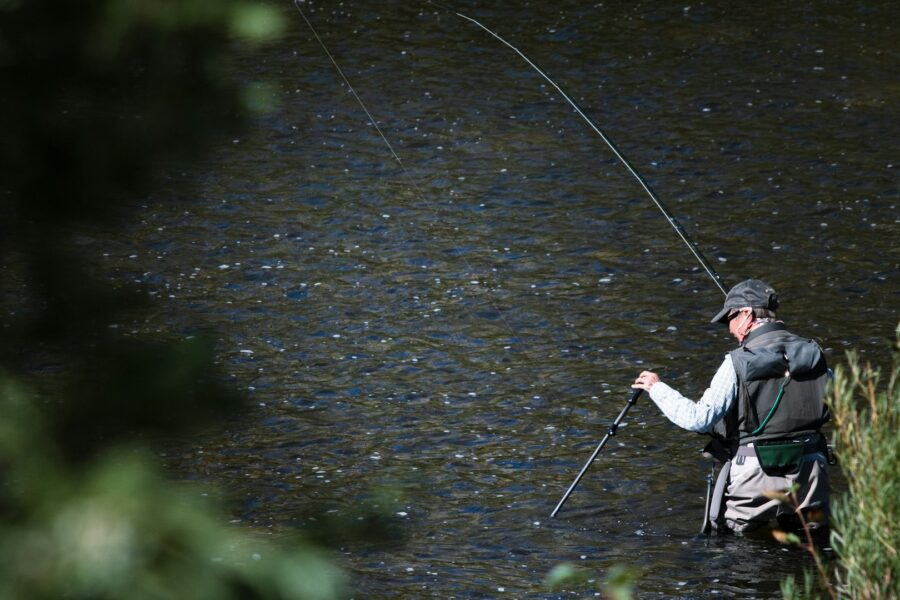
Trout Fishing in Arkansas: Seasons, Rules and Rivers for Beginners
Mention trout fishing in Arkansas to friends from out of state and most of them picture bass boats and catfish ponds. Then you show them a photo of a rainbow trout pulled from a misty Ozark river in July. North Arkansas holds some of the most famous trout water in the country, and you do not need years of experience to enjoy it. You need to understand a few things that make it different from trout fishing almost anywhere else.
Water made cold by dams and springs
The Arkansas Game and Fish Commission says it directly on its trout page: trout are not native to Arkansas. The state’s trout fisheries exist because large Corps of Engineers dams release cold water from deep in their lakes, turning the rivers below them into year-round trout habitat. Before the dams, rivers like the White held smallmouth bass and other warmwater fish.
That gives Arkansas two basic kinds of trout water:
- Tailwaters. The rivers below big dams, where water level and speed rise and fall as the dam generates hydropower.
- Spring-fed rivers. Rivers kept cool by a large spring, with a steadier flow that is not tied to a power schedule.
Most beginner mistakes come from not knowing which kind you are standing in. On a tailwater, the river you wade at 7 a.m. may be several feet deeper by noon. On a spring-fed river, rain is the main thing that changes the water.
The main trout rivers at a glance
You will hear these names again and again. Treat this as a map, not a full guide to each.
- White River below Bull Shoals Dam. The best known of all, with trout water stretching from the dam to the Highway 58 crossing at Guion. It is a big tailwater with long stretches of riffles, runs and pools, passing river towns such as Cotter and Calico Rock along the way. Our White River tailwater guide covers it in depth, and a separate piece plans a morning at Calico Rock.
- North Fork River below Norfork Dam. A short tailwater that meets the White at the town of Norfork.
- Little Red River below Greers Ferry Dam. A tailwater in central Arkansas, below Greers Ferry Lake near Heber Springs.
- White River below Beaver Dam. The upper White in northwest Arkansas, another tailwater.
- Spring River below Mammoth Spring. The state’s classic spring-fed trout river, gentler and steadier, which suits beginners. Our Spring River guide explains where to start.
The AGFC’s license rules also name trout permit waters below Lake Greeson, and the Little Missouri River below Narrows Dam has its own trout rules, so the list grows as you explore.
The Arkansas trout season runs all year
Because tailwaters and spring rivers stay cold, the state as a whole has no single closed Arkansas trout season. You can catch trout in January and in July. What changes is the experience:
- Winter brings quiet rivers, cold mornings and the chance to watch bald eagles. Some special areas can close seasonally around the brown trout spawn, so check the guidebook.
- Spring is pleasant on the water, though rain can raise both spring-fed rivers and the lakes behind the dams.
- Summer draws the biggest crowds. On tailwaters, hot afternoons with high power demand often bring more generation, so mornings are usually best for wading.
- Fall paints the Ozark ridges and sends the biggest browns of the year looking for gravel to spawn on.
For a beginner, spring and fall are the easiest seasons, with comfortable weather and plenty of willing fish.
Not everyone in your group fishes, and we think that’s fine. At Crown Lake Resort, the non-anglers can spend the day at the beach, the pools or Safari Mini Golf while you’re on the river. Browse our cabins, then phone 800-872-3301 so our team can plan a stay that works for everyone.
Licenses and the trout permit
Two pieces of paper, or two PDFs on your phone, cover most trout anglers. According to the AGFC’s license descriptions, you must carry a valid Arkansas fishing license once you turn 16. A trout permit comes on top of that whenever you keep a trout, and you need it just to fish the special trout waters below Beaver, Bull Shoals, Norfork, Greers Ferry and Greeson.
Out-of-state visitors choose between a nonresident annual license and a short trip license, then add the nonresident trout permit. Buying online through agfc.com the night before saves a stop on the way to the river.
Trout limits are tighter for now
Arkansas trout rules have been in flux. Production dropped at two hatcheries that supply the state’s trout water, one federal at Norfork and one state-run on the Spring River, and the AGFC responded with tighter limits on several tailwaters. The 2026-27 fishing regulations set out these rules, which stay in place until further notice:
- On the upper White (the dam down to Norfork Access) and the Norfork tailwater, the limit is two rainbows, and any trout longer than 14 inches goes straight back.
- Farther down the White, from Norfork Access to Guion, the limit is two trout with no more than one over 14 inches. Browns, cutthroat and tiger trout must reach 24 inches to keep, and brook trout 14 inches.
- On the Greers Ferry and Beaver tailwaters, anglers may keep two trout, both under 14 inches.
- On the Spring River, the brown trout minimum is 16 inches.
Away from special rules, the AGFC’s statewide limits set a daily trout limit of five, including no more than two brown trout, two cutthroat and two brook trout. The 2026-27 changes also did away with possession limits, and fishing rule changes now take effect each July 1. Since these limits hinge on hatchery supply and may shift again, check the current guidebook before you go. Many anglers release most of their trout anyway, which leaves more fish in the river for the next person.
Simple gear for a first trout trip
You do not need a fly rod to start. An ultralight spinning outfit spooled with light line, a handful of small spoons and inline spinners, and a few small jigs will catch trout on every river listed above. Where bait is allowed, a small hook and a worm under a light float is about as uncomplicated as fishing gets.
Bring polarized sunglasses for seeing into the water, layers for cold mornings, rain gear and wading boots that grip. A soft rubber net and a set of forceps or pliers make releases gentle. On any boat, put a life jacket on everyone: water this cold makes an accidental swim dangerous in every season.
A gentle first step: winter stocked ponds
For a low-pressure first trout outing, especially with children, look up the AGFC’s Family and Community Fishing Program. Each winter, from November through February, the program stocks catchable-sized rainbow trout in community ponds around the state. The pond list shows recent stocking dates, the water is calm, and a pond bank is a forgiving place to learn to cast before you try a big river.
Planning your first Arkansas trout trip
Keep the first trip uncomplicated. Choose one river based on the season and your comfort level, buy your license and trout permit, check the generation schedule if it is a tailwater, and plan to fish early.
Crown Lake Resort, right on the water in Horseshoe Bend, is a relaxed base for north central Arkansas trout water. After a morning on the river, come back to the lake for an easy afternoon of shoreline fishing. Everything else on site is on our explore the property page. Campers and motorhomes have a home of their own at our RV Resort, also known as the Crown Lake KOA Holiday, with concrete pads, hookups at every site and boat docks.
Once you’ve picked your river, ring us on 800-872-3301 and we’ll sort out the lake side of the trip at Crown Lake Resort. Browse our cabins and condos beforehand to find your place on the water.
Frequently Asked Questions
Is a trout permit required for catch-and-release fishing?
In many places, yes. The permit covers more than keeping fish: certain waters, such as the major dam tailwaters, require it just to fish there. The simplest rule for a visitor is to buy the trout permit along with the fishing license.
What is the easiest Arkansas trout river for a beginner?
Many beginners find the Spring River the easiest place to start, since a big spring rather than a power plant sets its flow. The White River is also very approachable on low-water days, especially with someone who knows the river.
Can kids fish for trout in Arkansas without a license?
Anglers under 16 do not need an Arkansas fishing license. Children still need to follow every limit and rule, and an adult fishing with them needs a license and, where required, a trout permit.
Where can I get the current Arkansas fishing regulations?
The AGFC publishes the Arkansas Fishing Guidebook on agfc.com, and printed copies go to license vendors and regional offices. The 2026-27 edition has a green border and states that it is effective beginning July 1, 2026, which helps you avoid using an older copy.
What is a tiger trout?
A tiger trout is a hybrid of a brown trout and a brook trout, with striking wavy markings along its sides. The AGFC lists it among Arkansas trout, and on the lower part of the White River’s managed trout water it carries a 24-inch minimum.
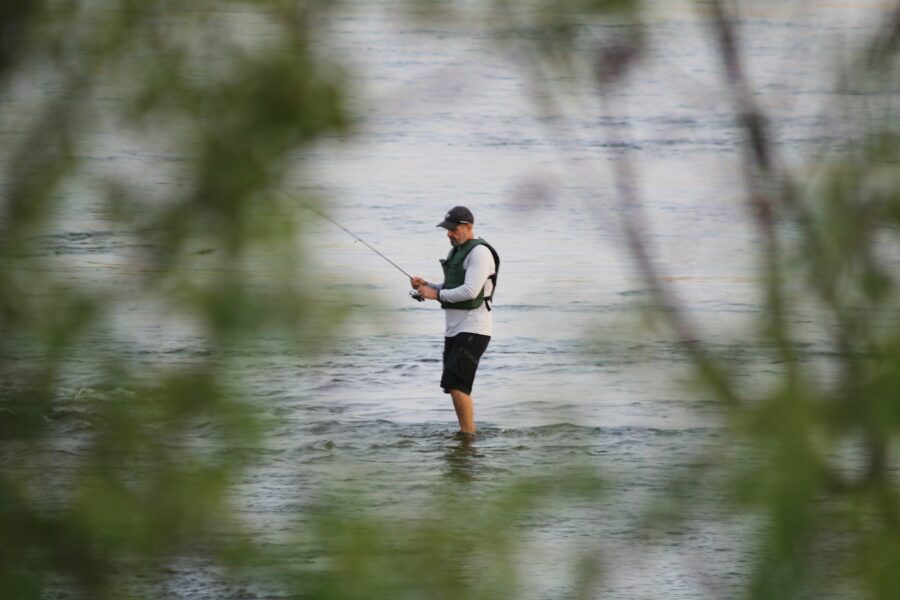
Spring River Trout Fishing: Where to Start
You have a free day, a light rod in the car, and a friend who keeps insisting the Spring River is the friendliest trout water in this corner of the Ozarks. The hard part is knowing where to begin on a river you have never seen. Spring River trout fishing makes the most sense taken in order: the spring itself, then the stretch to fish first, the gear, the rules and the timing.
Step one: start at the source
Most rivers begin as a trickle. The Spring River begins all at once. At Mammoth Spring, just south of the Missouri border, cold water wells up at a rate the Arkansas Game and Fish Commission puts at roughly 9.8 million gallons an hour, filling a 10-acre lake behind Dam #1 before it heads downstream, according to the AGFC’s Spring River trout waters page. That constant 58-degree flow is the whole reason trout can live here.
Spend half an hour at the spring before you rig up. Mammoth Spring State Park surrounds it, and right next door is the Mammoth Spring National Fish Hatchery, run by the U.S. Fish & Wildlife Service. Established in 1903, it is one of the oldest national fish hatcheries in the country and raises rainbow trout among other species, using water from the spring. Admission is free, and the aquarium and display ponds give you a close look at the fish you are about to chase. The aquarium keeps seasonal hours, so check before you go.
Step two: understand what makes this river different
Forget the generation schedule for a day. The Spring River is not a dam tailwater, so its flow does not swing up and down with demand for electricity. The AGFC lists typical discharge on the upper river at roughly 206 to 694 cubic feet per second, a much narrower range than you see below the big hydropower dams.
That steadiness is why the river suits a first-time trout angler so well. You can plan a morning without watching a power schedule. Rain is another matter. Heavy storms can raise and muddy the river, and the AGFC has reported reduced trout production after natural events at Jim Hinkle, the state-run trout hatchery on the Spring River. The U.S. Geological Survey runs gages at Mammoth Spring and below Dam #3 that report stage and flow, and a look at them after a wet spell tells you whether the river is fishable.
Step three: pick your first stretch
The AGFC manages the trout fishery on about 12 miles of river, from 100 yards below Dam #1 at Mammoth Spring State Park downstream to the mouth of Myatt Creek in Fulton County. Stay within that stretch on your first visit. It holds the coldest water and the trout the AGFC manages for.
Within it, look for three kinds of water:
- Riffles and the runs below them. Fast, broken water flowing into a deeper run carries food, and trout sit at the edges of the current waiting for it.
- Rock ledges and drop-offs. Much of the Spring River runs over rocky shelves where the bottom steps down, and trout like to hold just below those steps.
- Slower pools in the heat of the day. When the sun is high, fish often move to deeper, shaded water.
Wade carefully. The rock is often slick, and a wading staff earns its place. The river is popular with canoes and kayaks in warm weather, so give paddlers room and fish the quieter hours when you can.
After a day on the river, we think a lake view and an easy supper are the right way to finish. Our lakeview cabins look out over Crown Lake, and the front desk on 800-872-3301 can match one to your crew.
Step four: keep the gear simple
You need very little. An ultralight spinning outfit with light line handles most days, with small inline spinners, small spoons and tiny jigs in a few natural colors. Fly anglers can start with a small beadhead nymph such as a pheasant tail in the riffles, switch to a woolly bugger to cover deeper runs, and keep a few dry flies handy for when fish are rising.
Add polarized glasses to see into the water, wading boots with good grip and a small net. If you plan to release fish, a rubber net is kinder to their skin, and pinching down your hook barbs makes releases quick.
Step five: know the rules before you cast
Every angler aged 16 and up needs an Arkansas fishing license, and keeping a trout also takes a trout permit. The AGFC’s license descriptions cover the nonresident options, and the Spring River page links straight to the licensing site, so you can buy both on your phone the evening before.
The 2026-27 rules brought one notable change. Under the AGFC’s 2026-27 fishing regulations, any brown trout you keep from the Spring River has to measure 16 inches or more. Daily limits and area-specific rules are in the current Arkansas Fishing Guidebook, downloadable from agfc.com. Hatchery shortfalls have left fewer trout for stocking and rules have shifted more than once, so read the current guidebook before you travel.
Step six: choose your timing
The spring keeps the river cool, so trout fishing here is possible all year. Spring and fall are comfortable and quieter on the river. Summer brings warm days and more paddlers, which makes early morning the most peaceful time to fish. On crisp winter mornings, the spring water can feel warmer than the air.
In late summer, low and clear water can make trout skittish under a bright sun, so a shaded evening session is often kinder than midday. The AGFC’s weekly fishing report is a good read the night before for current conditions.
Where to stay for a Spring River day
Crown Lake Resort sits on Crown Lake in the heart of Horseshoe Bend, and the Spring River country around Mammoth Spring is a scenic drive away through the north central Arkansas hills. Fish the river in the morning, then give the afternoon to the beach, the heated indoor pool or a nap.
Groups who like to be close to the water can choose from our condos, two of which sit by the outdoor pool and beach. Anglers who roll in with a rig can park at the RV Resort, our Crown Lake KOA Holiday, which has pull-thru sites, full hookups and boat docks.
Pack a light rod for the lake too, and give us a ring on 800-872-3301 when you’d like to plan your stay at Crown Lake Resort. All our cabins and condos are online if you’d like a look first.
Frequently Asked Questions
Is the Spring River good for beginners?
Yes. Its spring-fed flow is steadier than a dam tailwater, which makes wading and planning simpler. Beginners should still wear grippy boots, take care on slick rock and avoid the river after heavy rain.
Can I visit the fish hatchery at Mammoth Spring?
Yes, and admission is free. Its Aquatic Conservation Center includes an aquarium, and visitors can walk among the ponds and raceways, feed fish in a display pond and stroll through a pollinator garden.
What species of trout are in the Spring River?
The river holds rainbow trout and brown trout. Rainbows are the fish most visitors hope to meet, while browns are warier and grow larger, which is part of why the 2026-27 rules protect them with a 16-inch minimum.
Can I fish the Spring River from a canoe or kayak?
Yes. Many anglers fish from canoes and kayaks and pull up on gravel bars to wade promising water. Wear a life jacket, scout unfamiliar stretches, and remember that ledges and drops can surprise a paddler loaded with fishing gear.
Can I fish the Spring River without a license on Free Fishing Weekend?
Usually, yes. The AGFC has long held a Free Fishing Weekend in June, when anyone may fish in Arkansas without a fishing license or trout permit. Confirm this year’s dates on agfc.com, and keep following the usual limits and length rules, including the 16-inch brown trout minimum, unless the AGFC says otherwise.
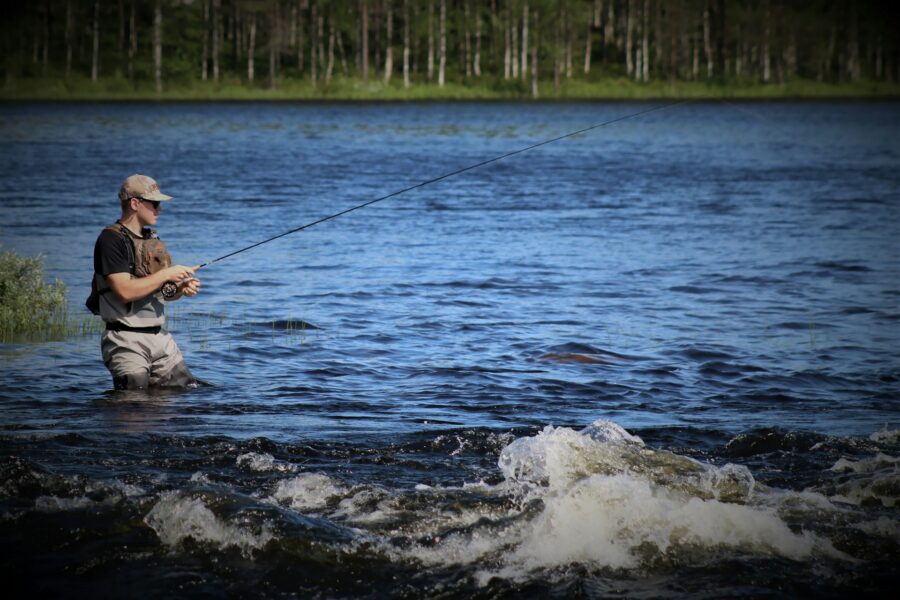
Trout Fishing at Calico Rock: Planning a Morning on the White River
The coffee is on, the rods are already in the truck, and outside the cabin window Crown Lake is still dark and perfectly still. In an hour you will be watching mist lift off the White River below the bluffs at Calico Rock, waiting for the first tap on your line. A good morning of Calico Rock trout fishing is mostly decided before you leave, by what you check the night before and what you remember to pack.
What follows is one morning, hour by hour, for visitors staying in Horseshoe Bend who want a few hours on the river and the rest of the day free.
The evening before: two numbers to check
The White River at Calico Rock is a tailwater. Its level depends on how much water comes through the turbines at Bull Shoals Dam upstream and, below their confluence, at Norfork Dam on the North Fork River. More generation means higher, faster water. Little or none means a lower, gentler river you can fish from gravel bars and the bank.
The generation schedule. The Southwestern Power Administration posts a current-day schedule of estimated generation on its generation schedules page, and its Generation Hotline is 866-494-1993. SWPA notes that the schedule can change with power demand, so look again in the morning before you leave.
The river gage. The U.S. Army Corps of Engineers keeps a gage on the White River at Calico Rock that reports river stage in feet, the change over the last 24 hours and the water temperature. If the stage has been climbing overnight, plan on fishing from a boat or staying well up the bank. The same page lists a flood stage of 19 feet, a number you hope never to see on vacation.
Calico Rock sits a long way downstream of both dams, so released water takes a while to arrive. Use the schedule to understand the shape of the day, then trust what the river in front of you is doing.
Packing the truck
Lay it all out the night before so you aren’t hunting for a hat in the dark:
- Your Arkansas fishing license and trout permit, saved on your phone or printed
- A light spinning rod with 4 to 6 pound line, or a fly rod if that is your style
- A small box of spoons, inline spinners, small jigs and minnow-style crankbaits
- Polarized sunglasses, which help you spot fish and submerged rocks
- A warm hat, a rain shell and an extra layer, since a cold river chills the air right above it even in summer
- Wading boots with good grip, and a life jacket for anyone going out in a boat
- A rubber landing net and a pair of pliers for quick releases
- Water and snacks, so you can stay put while the fish are biting
Don’t leave the trout permit off the list, even if you plan to release everything. The AGFC’s license descriptions note that the permit is required to keep trout and also to fish in certain trout waters, and visitors add it to a nonresident annual or trip license.
We like to make the evening before as easy as the morning after. Our 1 BR log cabin with porch sleeps four and has a full kitchen, a coffee maker, a washer and dryer for muddy clothes, and shared fire pits in the rustic cabin area. Call us on 800-872-3301 and we’ll check cabins for your dates.
First light: reading the river
Leave Crown Lake early and enjoy the drive through the Ozark hills to Calico Rock. Get to the water as the light comes up. The first hours are often the calmest, both for the river and for you.
On low water, look for riffles spilling into deeper runs, the seams where fast water meets slow, and the edges of gravel bars. Cast across and slightly upstream, let your lure swing down, and keep it near the bottom. A plain box of spoons, spinners and small jigs covers most low-water mornings, and if the bites are slow, change color or size before you change spots.
On high water, plan to drift from a boat, letting the current carry you while your lure or bait bumps along near the bottom. Everyone aboard wears a life jacket, no exceptions. Tailwater stays chilly even in July, and a tumble over the side is a genuine emergency.
Mid-morning: watching for a rise
Pick a rock or a stick near your feet and keep glancing at it. If it starts to disappear, the river is coming up. You may also feel a stronger push against your legs or see more leaves drifting past. Walk out right away, back along the route you came in on. A rising tailwater is never something to test.
On a day with little or no generation, mid-morning can stay productive. Work new water rather than pounding the same run.
The rules for this stretch
Calico Rock lies below the North Fork confluence, inside the section the AGFC manages from the Norfork Access ramp down to the Arkansas Highway 58 bridge at Guion. Under the 2026-27 fishing regulations, anglers here may keep two trout a day, only one of them longer than 14 inches. A brown, cutthroat or tiger trout has to reach 24 inches before you can keep it, and a brook trout 14 inches. Hatchery losses that cut stocking are behind these rules, so look at the current guidebook before your trip in case anything has changed.
Many anglers release most of what they catch here. The AGFC’s catch-and-release tips are easy to follow: wet your hands before touching a fish, use a rubber net, keep the fish in the water as much as possible, take any photo with the fish in the net just above the surface, and if a hook is swallowed, cut the line close to the mouth rather than pulling it out.
Late morning: a walk and the drive home
By late morning, many anglers are content to call it. Rinse your boots, stow the rods and take a slow walk along the river before you leave. The bluffs above the water deserve a long look in any season, and in fall the hills turn gold and red around you.
Then point the truck back toward Horseshoe Bend, with most of the day still ahead.
Afternoon back at the lake
This part of the plan is what makes a fishing trip work for everyone you brought. Back at Crown Lake Resort, the rest of your group may already have claimed a patch of sand or a spot in the heated indoor pool. Join them, cast a line from the shore for an easy afternoon session, or settle in for pizza at Papa Dick’s on the property.
Our explore the property page covers the rest, from Safari Mini Golf to the hiking trails. If you are bringing an RV or a boat, our RV Resort, which runs as the Crown Lake KOA Holiday, has docks, full hookups and pontoon rentals.
Call us on 800-872-3301 and we’ll help you set up a few Calico Rock mornings from Crown Lake Resort. You can also browse every cabin and condo on our stays page and start counting down to that first cast.
Frequently Asked Questions
Can I fish from the bank at Calico Rock?
On low-water days, yes, wherever there is public access to the river. The maps on agfc.com show boat ramps and other public areas, which helps you find a legal place to reach the water, and bank anglers should still watch the level and move well back from the edge if the river begins to rise.
What time of year is best for Calico Rock fishing?
The river is a cold tailwater, so trout can be caught in every month. Many visitors like spring and fall for comfortable weather, while summer mornings are popular because afternoon power demand often brings more water.
Are brown trout found near Calico Rock?
Yes. Brown trout live throughout the White River tailwater and can grow large. With a 24-inch minimum in place around Calico Rock, most browns caught here go back in the river.
How do I know what the water temperature is at Calico Rock?
The Corps gage for the White River at Calico Rock reports water temperature alongside river stage and rainfall, with readings updated through the day. It is a quick check on your phone before you leave.
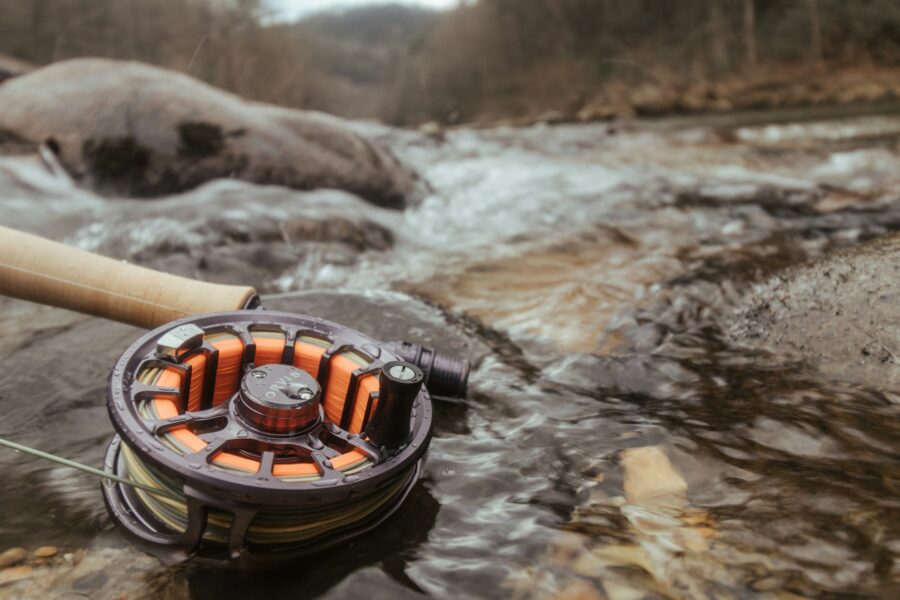
White River Trout Fishing: A Practical Guide for Visiting Anglers
You are knee deep on a gravel bar at first light, mist still on the water, and a rainbow has just taken your lure. Then you notice that the rock you stepped past ten minutes ago has gone under. That moment sums up White River trout fishing: some of the best trout water in the country, run by a dam you cannot see from where you stand. Once you understand how the river rises and falls, every other part of the trip gets easier.
You already know how to fish. What follows is how this particular river behaves, and how to plan around it.
A cold river made by a dam
Trout are not native to Arkansas. The Arkansas Game and Fish Commission explains that the state’s trout fisheries exist because of cold water released from beneath U.S. Army Corps of Engineers dams. Before the dams went in, this stretch of the White River was smallmouth bass water. The cold discharge ended that, and stocking of rainbow and brown trout followed. Brown trout can reproduce in the river, while rainbows depend on regular stocking, according to the AGFC trout page.
The AGFC manages the trout fishery from Bull Shoals Dam downstream to the Arkansas Highway 58 bridge at Guion. Along the way the river passes Cotter, takes in the North Fork River from Norfork Dam, and runs on past Calico Rock. Water from the bottom of the lake stays cold all year, so you can fish for trout here in August as happily as in January. You may hook rainbow, brown, cutthroat and brook trout, and now and then a tiger trout.
Generation decides what kind of day you get
The level in the tailwater depends almost entirely on how much water is moving through the dam’s turbines. With no units running, the river drops to a gentle, wadeable flow with exposed gravel bars and riffles. When generation starts, it can rise several feet and turn fast and pushy, and the wading spots you loved at dawn disappear.
The Corps of Engineers’ Little Rock District says that when the White River lakes are below the top of their conservation pool, the Southwestern Power Administration usually sets releases based on the demand for power. When the lakes are high, the Corps sets release requirements for flood management, and those releases usually still go through the turbines. So a hot afternoon with high electricity demand often brings more water, while a mild spring weekend may bring very little. The Little Rock District water management FAQ also notes that the district does not base release decisions on rainfall forecasts.
Reading the generation schedule
The Southwestern Power Administration publishes a current-day schedule of estimated generation, in megawatts, for the projects it schedules power from. Find it on the SWPA generation schedules page or call the SWPA Generation Hotline at 866-494-1993.
Good habits with the schedule:
- Check the night before and again in the morning. SWPA says plainly that the megawatts scheduled, and so the rate of release, can change as power demand rises or falls. The Corps may also schedule releases for reasons other than hydropower.
- Think in hours. A schedule showing zero generation until midday and heavy generation in the afternoon tells you to wade early and be off the gravel bars well before that water arrives.
- Allow for travel time. Water released at the dam takes time to reach places farther down. The farther downstream you fish, the later the rise reaches you, so treat the schedule as a guide to timing, not a stopwatch for your exact spot.
The Corps also posts lake and river data on its Little Rock District water control site and in its “USACE Little Rock” app, handy for checking river stages the morning you go.
After a cold start on the river, a hot shower and a cabin kitchen go a long way, and we’d love to have you. Several of our cabins pair a kitchen with a porch or deck, and the front desk on 800-872-3301 can help you choose the right one for your group.
Low water: wading the riffles and gravel bars
Low water is when most visiting anglers fall for this river. With the turbines off, you can wade to riffles and seams, read the current, and fish the slower water behind gravel bars where trout wait for food to drift past. Light spinning tackle with small spoons, inline spinners or small jigs works well, and fly anglers do well with small nymphs and midges under an indicator.
Wear felt or studded soles, carry a wading staff if you have one, and keep an eye on the bank. Pick your exit route before you walk out, because the rise can come faster than you expect, especially if the schedule changed after you checked it. If the water starts to climb, debris begins floating past, or the sound of the river changes, head for the bank at once. Don’t stay for one more fish.
In fall and winter, brown trout spawn in the tailwaters. The AGFC describes their nests, called redds, as clean, oval patches of small to medium gravel, typically 2 to 3 feet across, and asks wading anglers to avoid trampling them. Step around any bright patch of clean gravel in those months. The AGFC has also used a seasonal closure on the catch-and-release area right below Bull Shoals Dam during the spawn, so read the current guidebook before fishing that section in late fall or winter.
High water: drifting from a boat
When the generators are running, the river belongs to boats. The classic approach is the drift: run upriver, cut the motor, and float back down with baits or lures bumping along near the bottom. Heavier spoons, crankbaits and jigs that get down in the current earn their place in high water, and many anglers drift natural baits where the rules allow.
Everyone aboard should wear a life jacket. The water is cold enough all year that a fall overboard is serious even in July.
Current rules on the upper White River
Trout limits on the White River were tightened after production dropped at the Norfork National Fish Hatchery and the state’s Jim Hinkle Spring River State Fish Hatchery, leaving fewer trout for stocking. The AGFC’s 2026-27 fishing regulations keep these limits in place until further notice:
- Bull Shoals Dam to the Norfork Access ramp: keep up to two rainbow trout, and release all trout longer than 14 inches immediately.
- Norfork Access ramp to the Highway 58 bridge at Guion: keep up to two trout, with only one over 14 inches. Brown, cutthroat and tiger trout have a 24-inch minimum, and brook trout a 14-inch minimum.
The catch-and-release areas on the river carry their own tackle rules, such as artificial lures and barbless hooks, so check the current Arkansas Fishing Guidebook for exact boundaries before you fish them. Because these limits depend on hatchery supply and can change again, read the guidebook on agfc.com before every trip instead of relying on any article, ours included.
You need two things in your pocket. From age 16 you must carry an Arkansas fishing license, and the AGFC’s license descriptions explain that a trout permit is needed both for keeping trout and for fishing certain special waters at all, the tailwaters below Bull Shoals and Norfork dams among them. Even if you plan to release every fish, buy the trout permit with your license. Visitors can choose a nonresident annual license or a shorter trip license, with the trout permit added on top.
Picking your season
The water is cold all year, so the river as a whole has no closed season and no single best month.
- Spring often brings mild days and steady fishing, though wet weather can mean extra releases.
- Summer is popular, but power demand on hot days often means afternoon generation, so mornings tend to be the wading window.
- Fall brings color to the Ozark hills and big brown trout moving toward their spawning gravel.
- Winter is quiet on the water, and back on Crown Lake it is the season to watch for bald eagles.
A few days in the area gives you room to adapt. If generation runs heavy one day, fish early, spend the afternoon on the lake, and try the river again the next morning.
Horseshoe Bend as a home base
Crown Lake Resort sits lakeside in Horseshoe Bend’s town center, a relaxed base for a fishing trip in north central Arkansas. Head for the White River at dawn and come back to a far gentler lake, where the rest of your group may have spent the day on the white sandy beach. Anglers who can’t put the rod down can keep fishing from the shore.
Lakefront units put the water right outside your door. If you tow a camper or a boat, our RV Resort (the Crown Lake KOA Holiday) has concrete pads with full hookups, plus boat docks and pontoon rentals. Front desk hours change with the seasons, and the contact page has the current ones.
We’d love to hear about the one that got away, so come stay with us at Crown Lake Resort and fish the White River on your own schedule. Call 800-872-3301 to reserve a cabin or condo, or look over all our lodging options first.
Frequently Asked Questions
Do I need a trout permit if I only plan to catch and release?
Yes, in many cases. The permit is required to fish some designated waters even if you keep nothing, and the upper White River below Bull Shoals Dam is one of them. Buy it at the same time as your license so it is never an afterthought.
Can I fish the White River when the generators are running?
Yes, but from a boat rather than on foot. High water is drift-fishing water. Wading during generation is dangerous because the river is fast and deep, and gravel bars that were dry in the morning can be well under the surface.
What should I bring for a day on the White River?
Bring your license and trout permit, layers and a rain jacket (the air above cold tailwater feels cooler than the surrounding hills), polarized sunglasses, a hat, wading boots with good grip, a life jacket for boat days, and a rubber landing net, which is gentler on fish you release.
Is the White River good for beginners?
Yes, especially at low water, when rainbows are often willing to take small spinners, spoons and jigs. A beginner should go with an experienced friend the first time and should always check the generation schedule before stepping in.
How can I find out how the fishing has been lately?
The Arkansas Game and Fish Commission publishes the Arkansas Wildlife Weekly Fishing Report on agfc.com, which regularly includes updates from the White River. Read it in the days before your trip for river levels, what the trout are taking and how the browns are behaving.
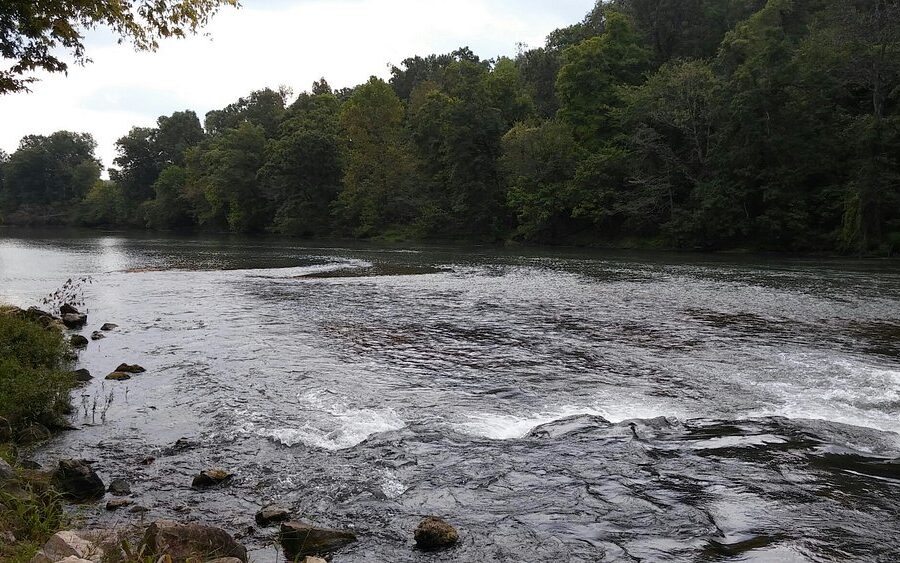
Canoeing the Spring River: How to Plan a Float
The best Spring River canoeing days often begin with a small moment of doubt. You are standing at the put-in, canoe half in the water, looking at the first riffle and wondering if you packed the right things, picked the right stretch and remembered where the car keys went. Planning turns that doubt into excitement. Work back from launch day, a step at a time, and your Spring River float trip will go smoothly from the first stroke to the drive home to Crown Lake in Horseshoe Bend.
What Makes the Spring River Such a Good Float
Mammoth Spring is the reason. The Arkansas Game and Fish Commission measures its output in millions of gallons an hour, all of it at 58 degrees, so the main river does not wait on recent rain the way most Ozark streams do. In late summer, when other rivers in the region are too low to float, the Spring River usually keeps moving. The trade-off is water that stays cold all year, and every step of your planning should account for that.
Two Weeks Out: Choose Your Stretch
Start by deciding how much river you want. The upper Spring River has rocky rapids and several small waterfalls, which the Encyclopedia of Arkansas says call for traveling with care, and it is especially popular for canoe trips and swimming. Arkansas Tourism describes lively drops followed by long, lazy pools, so even an active stretch gives you breathers.
Three things shape the choice:
- Who is paddling. If anyone is new, pick a shorter float with fewer drops, and pair each beginner with an experienced partner in the same canoe.
- How long you want on the water. Leave room for swimming and lunch on a gravel bar. Groups enjoy the river more when they aren’t racing the clock.
- Who else is on the water. The first dozen or so miles downstream of the spring are managed trout water, from just below Dam #1 to the mouth of Myatt Creek, so expect anglers wading and casting from gravel bars along that reach.
The South Fork is a different story. Mammoth Spring doesn’t feed it, and it can be too low to canoe in late summer and early fall, so look at recent rainfall before you choose it.
One Week Out: Sort Your Boats and Shuttle
Every float needs a way to get you and the boat back to the car. If you are bringing your own canoes or kayaks, the simplest setup is two vehicles: leave one at the take-out, then drive everyone and the boats to the put-in. Settle that plan, and your take-out spot, before launch day.
Public access is limited, so it helps to know about the state’s Spring River WMA (named for Harold E. Alexander) below Hardy. The AGFC’s WMA page lists canoeing on the Spring River among its activities, notes a public boat ramp, and reminds visitors that a valid hunting license, fishing license or WMA/Lake Conservation Permit is required for all users. Anywhere else, obey posted signs and get permission before you launch.
If anyone in your group is new to paddling, Crown Lake is a friendly place to practice first. Our RV Resort rents canoes and kayaks for an hour or two of strokes on calm water, and our log cabin with a porch is a cozy spot to dry out afterward. Call us on 800-872-3301 and we’ll help with dates.
A Few Days Out: Learn the Rules
Arkansas has clear rules for canoes and kayaks. The AGFC’s paddling safety advice spells them out:
- Life jackets: Children 12 and under must wear a U.S. Coast Guard approved life jacket. Everyone older must have one readily accessible, and the AGFC recommends wearing a well-fitting vest no matter how strong a swimmer you are.
- Throwable device: Canoes and kayaks 16 feet and longer must carry a throwable life preserver.
- No glass: Glass containers are illegal in canoes and kayaks.
- Coolers and trash: Cooler lids must be fastened, each boat needs a closable trash container, and drinks need floating holders.
The Night Before: Pack for Cold Water
People skip this step, and on the Spring River it matters most. The AGFC’s advice is to dress for the water temperature, not the air temperature. On a warm day that might just mean quick-dry clothes and a spare layer. In spring, fall and winter it means synthetic or wool layers and a full change of dry clothes sealed in a waterproof bag.
For each canoe, pack:
- A properly fitted life jacket for everyone, plus the throwable device if your boat is 16 feet or longer
- A spare paddle shared within your group
- A dry bag with dry clothes, a light jacket, phone and keys
- Water, snacks and lunch in a cooler with a fastened lid
- Sunscreen, a hat and sunglasses with a strap
- Shoes that strap on and can get wet, for climbing out on rocks and gravel
- A small trash bag that closes
Then make a float plan. Tell someone at home where you are putting in, where you are taking out and when you expect to call.
Launch Morning: Check the Water
Even a spring-fed river changes. Look up the two USGS gauges the AGFC points paddlers to, one at Mammoth Spring and one downstream of Dam #3, and compare the morning’s flow with a normal day, which usually falls somewhere between about 200 and 700 cubic feet per second. The AGFC warns that rain miles upstream can bring sudden rises in water level and current, so be prepared to change plans or cancel. A muddy, fast-rising river is a day to spend on the lake instead.
On the Water: Read the Shoals and Share the River
Scout what you can’t see. Before a drop or a blind bend, pull over and look. If a drop looks beyond your skill, walk the canoe around it along the bank.
Keep the boat straight. In shoals, aim for the smooth tongue of water, often a V pointing downstream, and keep the canoe lined up with the current rather than sideways to it.
Know what to do if you tip. Swim to the upstream end of the boat, keep your feet up and pointed downstream, and let the current carry you to slower water before standing. The AGFC suggests practicing a capsize and self-rescue in calm water before you take on faster current.
Be a good neighbor. Give wading anglers plenty of room, keep noise down, and pack out every scrap of trash, including anything you find.
After the Float: Back to Crown Lake
Loading a wet canoe onto the car at the end of a good river day comes with its own kind of contentment. Back at Crown Lake Resort, lodging guests can thaw out in the sauna and the hot tub by the indoor heated pool, and a hungry crew can head to Papa Dick’s for pizza. Guests in the rustic cabin area can gather at the fire pits in the cabin common spaces and argue over who tipped first.
If you are traveling with an RV, the RV sites at our RV Resort have concrete pads, full hookups and private shower rooms, which feel wonderful after a cold river.
We’re happy to help you line up lake days and river days, so ring the front desk on 800-872-3301 whenever suits you. You can pick out a cabin, condo or lakefront stay and wander around the Crown Lake Resort site first.
Frequently Asked Questions
Can you canoe the Spring River in winter?
Yes. Because Mammoth Spring keeps the river flowing, the main Spring River can be floated year round. Winter paddlers should wear insulating synthetic or wool layers, carry a full change of dry clothes, and keep floats short, since a capsize in cold water is far more serious than in summer.
Do I need a boater registration for a canoe in Arkansas?
Rules depend on the type of boat and whether it has a motor. Check the AGFC’s current boating regulations before your trip, especially if you plan to add a trolling motor to a canoe or kayak.
How can beginners prepare for Spring River canoeing?
Paddle with an experienced partner rather than alone, and practice capsizing and getting back to shore in calm water before you head into moving current. A flat-water session on a lake is an ideal place to build confidence.
Is the Spring River crowded in summer?
On summer weekends, the most popular stretches can be busy with rafts, canoes and kayaks. Arkansas Tourism mentions a lively summer crowd, so launch early or float midweek if you prefer more space and quieter pools.
What wildlife might I see while canoeing the Spring River?
Late winter is your best chance at bald eagles along the river, according to the AGFC. White-tailed deer and wild turkey also live in the woods along the river on the Spring River WMA.
